
Air travel is one of the safest modes of transportation today, but that level of safety has been achieved through decades of learning from tragic Aviation Accidents. Every major aviation accident has led to important improvements in aircraft design, pilot training, airport operations, air traffic control, and safety regulations. we’ll explore the Top 10 Aviation Accidents That Changed Aviation History and the lasting impact each one had on the aviation industry.
Top 10 Aviation Accidents That Changed Aviation History
10. Air India Flight 171 (2025)

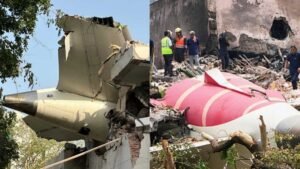

Date: 12 June 2025
Location: Ahmedabad, Gujarat, India
Aircraft: Boeing 787-8 Dreamliner
Fatalities: 241 people on board (plus 19 people on the ground)
What Happened?
On 12 June 2025, Air India Flight 171 was operating from Ahmedabad to London Gatwick when the Boeing 787-8 Dreamliner crashed shortly after takeoff from Sardar Vallabhbhai Patel International Airport. The aircraft lost thrust from both engines soon after departure and failed to gain sufficient altitude before crashing into a residential area near the airport. The accident resulted in the deaths of 241 passengers and crew members, along with people on the ground.
The investigation focused on possible technical issues, including engine performance and aircraft systems, along with operational factors. The accident became one of the most significant aviation disasters involving the Boeing 787 and led to increased attention on aircraft safety inspections and operational procedures.
This accident majorly changed aviation:
– Increased inspections of Boeing 787 aircraft systems after the accident.
– Improved investigation methods for modern commercial aircraft accidents.
– Greater focus on engine reliability and flight performance monitoring.
– Stronger safety checks before departure and after takeoff operations.
– Better airport emergency response planning aviation accidents.
9. American Airlines Flight 191 (1979)
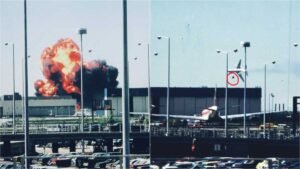
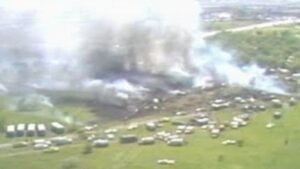
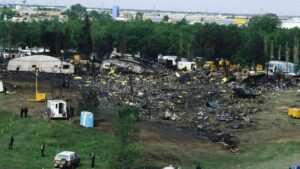
Date: 25 May 1979
Location: Chicago O’Hare International Airport, Illinois, USA
Aircraft: McDonnell Douglas DC-10-10
Fatalities: 273 people
What Happened?
On 25 May 1979, American Airlines Flight 191 was departing from Chicago O’Hare International Airport for Los Angeles when the left engine and its pylon separated from the aircraft shortly after takeoff. The separation damaged the hydraulic systems and caused the loss of the left wing’s leading-edge control surfaces. The pilots lost control of the aircraft, and the DC-10 rolled over and crashed near the airport, killing all 271 passengers and crew members along with two people on the ground.
The investigation found that improper maintenance procedures during engine removal and installation contributed to the failure. The accident led to major improvements in aircraft maintenance practices, engine mounting inspections, and certification requirements for wide-body aircraft.
This accident majorly changed aviation:
– Improved aircraft maintenance during engine removal and installation work.
– Stricter inspections of engine pylons and attachment structures worldwide.
– Better certification standards for large commercial aircraft safety.
– Improved maintenance records and quality control procedures industrywide.
– Stronger maintenance regulations to prevent aviation accidents.
8. Iran Air Flight 655 (1988)

Date: 3 July 1988
Location: Strait of Hormuz, Persian Gulf
Aircraft: Airbus A300B2-203
Fatalities: 290 people
What Happened?
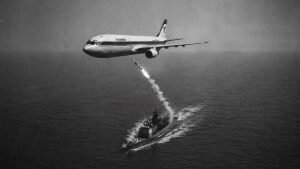
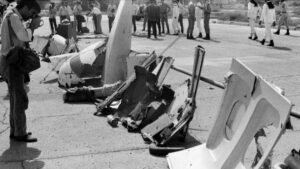
On 3 July 1988, Iran Air Flight 655 was operating from Tehran to Dubai via Bandar Abbas when it was shot down over the Strait of Hormuz by the guided missile cruiser USS Vincennes of the United States Navy. The aircraft was flying in Iranian airspace when it was mistakenly identified as a military aircraft. A surface-to-air missile struck the Airbus A300, causing it to break apart in mid-air and killing all 290 passengers and crew members on board.
The accident was caused by a tragic identification error during a period of military conflict. The incident highlighted the risks of civilian aviation operations in conflict zones and led to increased focus on military-civilian airspace coordination and improved identification procedures.
This accident majorly changed aviation:
– Better coordination between military and civilian aviation authorities worldwide.
– Improved aircraft identification procedures in conflict zone operations.
– Greater caution for civilian flights near military activity areas.
– Better communication between air traffic control and military units.
– Stronger international rules to reduce aviation accidents during conflicts.
7. Malaysia Airlines Flight 17 (2014)
Date: 17 July 2014
Location: Near Hrabove, Donetsk Oblast, Ukraine
Aircraft: Boeing 777-200ER
Fatalities: 298 people
What Happened?
On 17 July 2014, Malaysia Airlines Flight 17 was flying from Amsterdam to Kuala Lumpur when it was shot down while cruising over eastern Ukraine, an area affected by armed conflict. Investigators concluded that the aircraft was struck by a surface-to-air missile, causing it to break apart in mid-air. The wreckage fell near Hrabove, killing all 298 passengers and crew members on board.
The investigation determined that the aircraft was destroyed by a missile launched from territory involved in the conflict. The tragedy highlighted the dangers of flying over active war zones and led to major changes in international flight route planning and airspace risk assessments.
This accident majorly changed aviation:
– Better risk assessment before flying over conflict zone airspace.
– Improved international sharing of airspace safety information worldwide.
– Airlines avoided dangerous routes during military conflict situations.
– Stronger cooperation between governments and aviation authorities globally.
– Safer flight planning to reduce aviation accidents in conflict zones.
6. Saudia Flight 163 (1980)
Date: 19 August 1980
Location: Riyadh, Saudi Arabia
Aircraft: Lockheed L-1011 TriStar
Fatalities: 301 people
What Happened?
On 19 August 1980, Saudia Flight 163 was operating from Riyadh to Jeddah when a fire started in the aircraft’s aft cargo compartment shortly after takeoff. The pilots successfully returned the aircraft to Riyadh and performed an emergency landing. However, after landing, the aircraft continued taxiing before stopping, and the evacuation was delayed. A lack of immediate evacuation resulted in the deaths of all 301 passengers and crew members due to smoke and fire inside the aircraft.
The accident highlighted the importance of rapid emergency response, effective evacuation procedures, and improved aircraft fire detection and suppression systems. The investigation led to major changes in aircraft safety procedures and emergency training.
This accident majorly changed aviation:
– Improved aircraft fire detection and suppression system performance.
– Better emergency evacuation training for pilots and cabin crews.
– Stricter cargo compartment fire protection and inspection standards.
– Greater focus on rapid passenger evacuation after emergency landings.
– Improved emergency response procedures for aviation accidents.
5. Air India Flight 182 (1985)
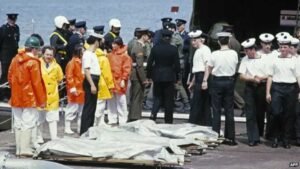
Date: 23 June 1985
Location: Atlantic Ocean, near the coast of Ireland
Aircraft: Boeing 747-237B
Fatalities: 329 people
What Happened?
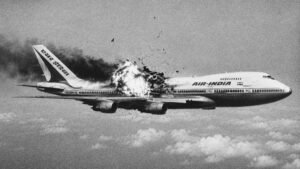
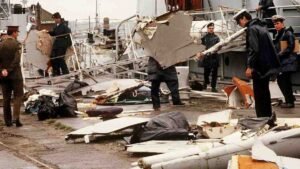
On 23 June 1985, Air India Flight 182 was operating from Montreal to London and onward to Delhi when a bomb hidden inside checked baggage exploded while the aircraft was cruising over the Atlantic Ocean near Ireland. The powerful explosion caused the Boeing 747 to break apart in mid-air, and it crashed into the sea, killing all 329 people on board. The bombing remains one of the deadliest acts of aviation terrorism in history.
The investigation determined that the aircraft was destroyed by an explosive device placed inside passenger baggage. The tragedy exposed serious weaknesses in airport security and baggage screening, leading to major improvements in international aviation security measures.
This accident majorly changed aviation:
– Stronger airport security and passenger baggage screening procedures worldwide.
– Better baggage matching and security inspection requirements at airports.
– Improved international cooperation against aviation terrorism worldwide.
– Better intelligence sharing between aviation and security agencies.
– Stronger explosive detection systems to prevent aviation accidents.
4. Turkish Airlines Flight 981 (1974)
Date: 3 March 1974
Location: Ermenonville Forest, near Paris, France
Aircraft: McDonnell Douglas DC-10
Fatalities: 346 people
What Happened?
On 3 March 1974, Turkish Airlines Flight 981 departed from Paris for London when its rear cargo door failed shortly after takeoff because it was not properly secured. The door suddenly opened, causing explosive decompression that severely damaged the aircraft’s control systems. The pilots lost control of the aircraft, and within minutes it crashed into the Ermenonville Forest near Paris, killing all 346 people on board.
A faulty cargo door opened shortly after takeoff, causing explosive decompression and damaging the aircraft’s flight control systems. The crew could not regain control, and the aircraft crashed near Paris, leading to major improvements in aircraft design and safety standards.
This accident major changed aviation:
– Improved cargo door locking systems on commercial aircraft worldwide.
– Stricter certification standards for critical aircraft structures and systems.
– Better inspection procedures for aircraft cargo door assemblies.
– Improved structural safety requirements for commercial aircraft worldwide.
– Enhanced safety testing to prevent similar structural failures worldwide.
3. Charkhi Dadri Mid-Air Collision (1996)
Date: 12 November 1996
Location: Charkhi Dadri, Haryana, India
Aircraft: Boeing 747 and Ilyushin Il-76
Fatalities: 349 people
What Happened?
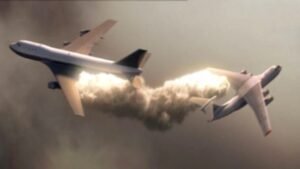
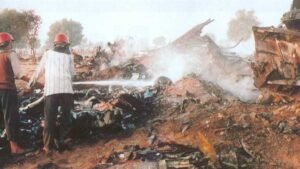
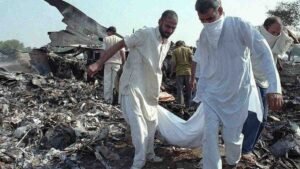
On 12 November 1996, Saudi Arabian Airlines Flight 763 and Kazakhstan Airlines Flight 1907 collided in mid-air near Charkhi Dadri, Haryana, India. The Saudi Boeing 747 was departing from Delhi, while the Kazakh Ilyushin Il-76 was approaching Delhi Airport. The collision occurred because of a communication misunderstanding, incorrect altitude separation, and failure to follow proper air traffic control instructions. Both aircraft crashed, killing all 349 people on board, making it the deadliest mid-air collision in aviation history.
The accident was caused by the failure of maintaining proper vertical separation between the two aircraft. The investigation highlighted the need for improved cockpit communication, strict altitude procedures, and advanced collision avoidance systems to prevent similar aviation accidents.
This accident majorly changed aviation:
– Better air traffic control communication and operating procedures worldwide.
– Wider use of Traffic Collision Avoidance Systems on aircraft.
– Improved pilot training for altitude control and emergency situations.
– Better coordination between pilots and air traffic controllers daily.
– Stricter aircraft separation act and rules to prevent aviation accidents.
2. Japan Airlines Flight 123 (1985)
Date: 12 August 1985
Location: Mount Takamagahara, Gunma Prefecture, Japan
Aircraft: Boeing 747SR
Fatalities: 520 people
What Happened?
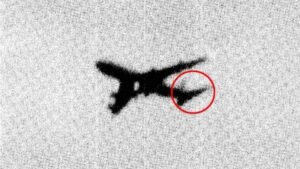
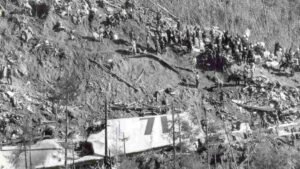
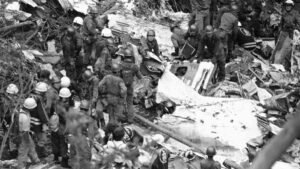
On 12 August 1985, Japan Airlines Flight 123 departed from Tokyo for Osaka when a faulty repair made several years earlier caused the aircraft’s rear pressure bulkhead to fail during flight. The sudden decompression destroyed the vertical stabilizer and damaged all hydraulic systems, leaving the pilots with almost no control. Despite their efforts to fly the aircraft for more than 30 minutes, it eventually crashed into a mountain, killing 520 people.
A faulty structural repair caused the aircraft to lose its vertical stabilizer and hydraulic systems shortly after takeoff. Although the pilots fought to control the aircraft for over 30 minutes, it crashed into a mountain, becoming the deadliest single-aircraft accident in aviation history.
This accident major changed aviation:
– Improved aircraft repair and maintenance inspection procedures worldwide.
– Better structural inspections for critical aircraft components and systems.
– Stronger quality control during aircraft repair and maintenance work.
– Increased oversight of aircraft maintenance organizations and facilities.
– Improved repair standards to prevent aviation accidents.
1. Tenerife Airport Disaster (1977)
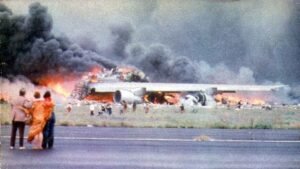
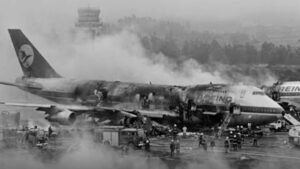
Date: 27 March 1977
Location: Los Rodeos Airport (now Tenerife North Airport), Canary Islands, Spain
Aircraft: KLM Boeing 747 & Pan Am Boeing 747
Fatalities: 583 people
What Happened?
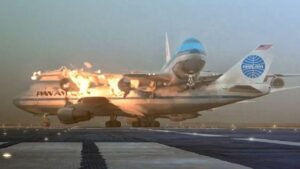
On 27 March 1977, two Boeing 747 aircraft operated by KLM and Pan Am were diverted to Tenerife Airport after another airport was temporarily closed. The airport became overcrowded, and heavy fog reduced visibility. While the Pan Am aircraft was still taxiing on the runway, the KLM crew mistakenly believed they had takeoff clearance. The two aircraft collided at high speed, killing 583 people in the deadliest aviation accident in history.
Heavy fog, airport congestion, and a misunderstanding between the KLM crew and Air Traffic Control caused a runway collision with the Pan Am aircraft. The tragic accident killed 583 people and This disaster became one of the most significant Aviation Accidents in history, leading to major improvements in aviation communication, pilot training, and runway safety worldwide.
This accident major changed aviation:
– Standardized English communication for pilots and air traffic controllers.
– Enforced stricter takeoff and taxi clearance procedures at major airports.
– Made read-back of all critical air traffic instructions mandatory.
– Introduced Crew Resource Management to improve cockpit teamwork worldwide.
– Developed advanced runway safety systems to prevent aviation accidents.
Note: These Aviation Accidents changed the aviation industry forever. Every Aviation Accident helped improve aircraft safety, pilot training, and global flight operations, making Aviation Accidents an important part of aviation history.
1 thought on “Top 10 Aviation Accidents That Changed Aviation History”